BP Therapy Group Default Are Christians Allowed to Do Yoga? A Mornington Perspective

Are Christians Allowed to Do Yoga? A Mornington Perspective

In Mornington, Australia—a coastal town known for its wellness culture and spiritual diversity—the question “Are Christians allowed to do yoga?” is more than just theoretical. It’s personal. With yoga classes offered in boutique studios across Main Street and spiritual retreats taking place along the Mornington Peninsula, it’s natural for local Christians to wonder: Can I do yoga and stay true to my faith?
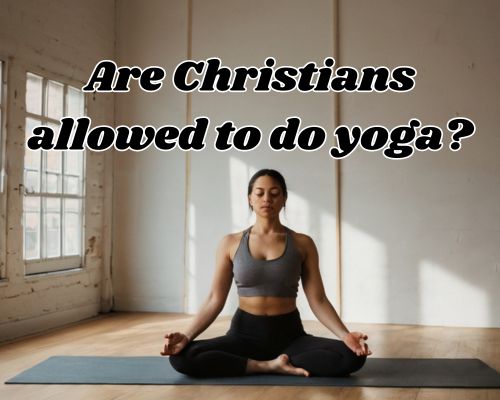
a christian doing yoga in a studio

With Bikram Yoga Mornington, we will explore the theological, cultural, and physical dimensions of this question. It will address common concerns, present viewpoints from Christian thought leaders, and consider how yoga is practiced in Mornington today. By the end, you’ll have a nuanced, insightful answer—rooted in spiritual integrity and local relevance.

The Roots of Yoga: What Every Christian Should Know

Yoga, derived from the Sanskrit word “yuj,” meaning “to yoke” or “to unite,” originated in ancient India. Its purpose was to unite the body, mind, and spirit in pursuit of spiritual enlightenment. Classical yoga, as outlined in the Yoga Sutras of Patanjali, was a holistic spiritual path—not just a workout.

Many of its elements—meditation, breath control (pranayama), ethical precepts (yamas and niyamas)—were deeply embedded in Hindu and Buddhist traditions. For some Christians, this presents an immediate tension. Can a practice rooted in another faith be reconciled with Christian beliefs?

In Mornington’s wellness community, yoga often takes a secular, fitness-based form. Studios such as Bikram Yoga Mornington or Peninsula Hot Springs offer classes emphasizing mindfulness, flexibility, and stress relief, not chanting to deities or spiritual doctrines. But is stripping yoga of its spiritual origins enough?

What Do Christian Leaders Say?

Opinions vary widely within the Christian community. Let’s examine a spectrum of perspectives, from conservative to liberal, noting how they manifest in Mornington-based spiritual practice.

❖ Traditionalist Viewpoint

Some Christian denominations—particularly conservative Evangelical and Pentecostal churches—warn against practicing yoga altogether. They argue that even “Western yoga” retains spiritual energy or symbolism incompatible with Christianity.

This view is supported by organizations like GotQuestions.org, which caution that yoga postures and meditations may unknowingly open one up to spiritual influences or practices foreign to biblical teachings. Some churches in the Mornington area, such as those affiliated with the Australian Christian Churches (ACC) network, echo these concerns during wellness forums and youth retreats.

❖ Moderate Approach

Other Christians adopt a more moderate stance: yoga is permissible if stripped of its spiritual overtones. Instead of chanting “Om,” practitioners might recite Scripture or silently pray during poses.

Prominent voices such as Father Joe Pereira (a Catholic priest and certified Iyengar yoga teacher) advocate for “Christian yoga” as a means of enhancing physical and spiritual well-being. In Mornington, this view resonates with inclusive parishes like St. Macartan’s Catholic Church, where wellness is seen as part of holistic stewardship of the body.

❖ Progressive Christian Interpretation

Progressive Christians, including some in Uniting Church circles in Victoria, argue that all truth is God’s truth. In this view, yoga is a tool—and like any tool, it can be used or misused. Practicing yoga with discernment and Christ at the center is not only permissible, it can be transformative.

This philosophy aligns with offerings like Christ-centered yoga classes occasionally held at Mornington community centers or coastal retreats, where Scripture is read during savasana (final rest pose).

Yoga Practice in Mornington: Spiritual Pitfall or Wellness Path?

Yoga is undeniably popular in Mornington. With the rising demand for wellness tourism across the Mornington Peninsula, local yoga events draw diverse participants—Christians included. Retreats at Greenfields Mornington, for instance, blend yoga with mindfulness, nature walks, and cold-plunge therapy.

Yet Christian residents are not blindly joining. Many evaluate instructors, class descriptions, and even studio mission statements before enrolling. Some ask:

  • Does this class involve chanting or mantras?
  • Is the instructor respectful of diverse beliefs?
  • Can I pray silently during practice?
  • Is the emphasis physical, mental, or spiritual?

This type of spiritual discernment is what Christian theologian Richard Foster refers to as “spiritual maturity.” It’s not about fear—it’s about wisdom.

Biblical Considerations: Can Yoga Align with Scripture?

While the Bible doesn’t mention yoga (unsurprisingly), it offers guiding principles for evaluating cultural practices:

  1. Romans 12:2 – “Do not conform to the pattern of this world, but be transformed by the renewing of your mind.”
    ➤ If yoga transforms your mind toward peace, humility, and Christ-centered focus, it may be worth exploring. If it distracts, avoid it.
  2. 1 Corinthians 10:23 – “Everything is permissible—but not everything is beneficial.”
    ➤ This verse invites Christians to assess yoga’s value personally, rather than adopting blanket rules.
  3. 1 Thessalonians 5:21 – “Test everything; hold fast to what is good.”
    ➤ Try different approaches: breathwork with Psalm 46:10, movement with Christian music, or reflective silence during savasana.

Alternatives for Christians in Mornington

For Christians seeking the physical benefits of yoga without spiritual dissonance, Mornington offers alternatives:

  • Pilates – Emphasizing core strength and flexibility, available at Core24 Health Club and Peninsula Pilates Studio.
  • Stretch & Scripture Classes – Hosted in some church halls, these combine gentle movement with devotionals.
  • Tai Chi & Qigong – While also Eastern in origin, some Christians find these practices less spiritually charged and more energy-focused.
  • Prayer Walks & Mindful Hikes – Popular on the Mornington Peninsula Walk, integrating nature, movement, and prayer.

Final Thoughts: Navigating Faith and Flexibility

So, are Christians allowed to do yoga?

In Mornington—and indeed worldwide—there is no one-size-fits-all answer. For some, yoga is a red flag. For others, it’s a road to healing. The key is intention.

If you’re a Christian in Mornington considering yoga, ask yourself:

  • Am I growing closer to Christ through this practice?
  • Does it cultivate peace, joy, and self-control—the fruit of the Spirit?
  • Am I being led astray or centered more deeply in grace?

Whether you’re flowing through sun salutations at a beachside class in Mt. Martha or meditating quietly at home, your heart posture matters more than your physical one.

Yoga is not inherently Christian—or anti-Christian. But you can choose to practice it in a way that honors your faith, body, and community.

Related Post

Where Does Lost Fat Go?Where Does Lost Fat Go?

If you’ve been working on improving your activity and nutrition with the goal of losing weight, you’ve probably asked yourself this question at least once.

As you probably know, energy (in this case, fat) cannot be created, nor destroyed.

So the question here is – How do your fat deposits transform when you are on a weight-loss diet or taking supplements?

In this article, you’re going to learn more about fat loss and what happens to the weight that disappears from the scale during a successful diet.

Let’s get to it, shall we?

How Do You Lose Weight, Even?

Though many fad diets have taken priority spots in people’s lives, fat loss is mainly about one specific principle, called “Eating in a caloric deficit”.

Your body requires a certain amount of energy to maintain its physiological processes and mass in space.

That amount of energy depends on the following factors:

  1. Gender
  2. Age
  3. Height
  4. Weight
  5. Non-training activity
  6. Training activity
  7. Food intake

If you consume more energy from food than your body needs to maintain its weight, you will progressively gain weight.

On the other hand, if you consume LESS energy from food than your body needs to maintain its weight, you will LOSE fat.

It’s quite simple and there is no way around it! Every fad diet that makes you lose weight, does so not because of the diet itself, but because of the caloric deficit that it helps you establish.

But Where Does Lost Fat Go?

When you’re in a deficit of energy, your body uses its energy deposits (fat) to compensate for that deficit.

That is to say that during fat loss, your body actually burns off the fat in order to use it for a variety of functions.

When oxidized (burned with the help of oxygen), fat leaves the body in the form of carbon dioxide and water!

That is to say that the two main “exhausts” for lost fat, are:

  1. The lungs
  2. The urinary system

In other words, when you lose fat, you exhale the carbon dioxide and then the water gets into your circulation, until it leaves the body as sweat and urine.

How Much Of The Fat Is Water?

Interestingly enough, when you lose fat, most of it comes out as carbon dioxide, through your lungs.

To be precise, about 80-85% of lost fat turns into carbon dioxide, while the other 15-20% turn to water.

For instance, if you lose 10 kg of fat, roughly 8 kg of it comes out through your lungs and the remaining weight is excreted in the form of urine/sweat.

Fun Fact

As a matter of fact, basically everything you consume comes out as carbon dioxide!


Nearly every gram of carbohydrate, protein, fat, and even alcohol, get converted to carbon dioxide and water, while the byproducts of the food leave the body as excrements.

The only exception for a nutrient that reaches your colon intact, is dietary fiber, which cannot be absorbed or digested but may help the digestive processes.

Everything else besides fiber is absorbed and then takes exit via the lungs!

Conclusion

Fat loss is simple, yet interesting – It only requires a caloric deficit but can make your body undergo drastic visual changes over a short period of time.

The process becomes even more interesting when you think about the fact that 85% of the weight that disappears from the scale, takes its exit through your lungs!

If you have any other interesting questions, let us know in the comments below!

Toothpaste For Sensitive Teeth – Do You Need Help?Toothpaste For Sensitive Teeth – Do You Need Help?

In some instances, sensitive teeth and also the gum (periodontal tissue) tissues which line them are the consequence of a buildup of bacteria and plaque (plaque is also responsible for gingivitis.) The sensitive area around the tooth is very sensitive, and so any slight change in the surrounding environment can cause the tooth to become uncomfortable or even painful. Sensitivity may occur as a result of the tooth being exposed to cold temperatures (which is sometimes unavoidable if one has to wear a dental plate), or it may be caused by certain foods and drinks. However, it can also be developed as a result of some medications which are prescribed for some patients.

Sensitive teeth can be quite a nuisance, especially if they affect the health of the gums and tissues surrounding the tooth. It is generally recommended that people affected with tooth sensitivity make sure that they brush their teeth and their mouths thoroughly at least twice a day, and after every meal. Brushing removes all the food particles from between the teeth and gums, while rinsing helps to loosen the sticky plaque. Sensitive individuals may also feel that toothbrush pressure is an issue and would therefore benefit from a tooth brush with softer bristles. The best advice is to experiment with different toothbrushes until you find one which suits your sensitivity, and always brush in the direction of the toothbrush teeth and gums.

When people have sensitive teeth, they will also experience pain and discomfort when chewing or swallowing. The most common reason for this discomfort is because of the location of the sensitive teeth – in the gums and on the inner cheekbones, on the back of the tongue and between the cheekbones. There can also be pain during sleep due to disrupted sleep habits caused by pain, swelling, irritation or overcrowding. This pain and discomfort can also be increased following the ingestion of certain foods. These foods include chocolate, spices, strong flavored coffees, peppermint, hot or spicy foods, garlic, onions, hot dogs, cheese, ice cream, fat, dairy products, tomatoes and other foods that can cause extreme pain and discomfort.

Dentists may recommend the use of desensitizing toothpaste if the person has several applications of painkillers already. Toothpastes that help block pain may contain potassium nitrate, thereby reducing inflammation and discomfort by numbing several applications. There are also products available on the market today that help reduce desensitization and discomfort, but the recommended product is a desensitizing toothpaste.

There are a number of causes of sensitive teeth. One of these is when you do not brush your teeth properly. Although brushing is recommended as a precautionary measure, in some cases it is not enough to solve the problem. In addition, the teeth can become stained from food, drink or tobacco products that are in your mouth. In order to resolve this problem, you should visit your dentist every two weeks and receive a special toothbrush made especially for sensitive teeth.

Although toothpaste for tooth sensitivity may provide temporary relief, the best way to avoid tooth sensitivity is to make sure that you follow a dentist’s instructions on a regular basis. If you suspect that your teeth have become more sensitive over time, contact your dentist to discuss possible steps to solve the problem. Alternatively, if toothpaste does not seem to be working, you should consider purchasing one of the over-the-counter dental treatments that can help. However, even with over-the-counter dental treatments, your dentist will first want to conduct a thorough exam to determine the cause of tooth sensitivity.

Harmonizing Hearts and Wallets: A Guide to Joint Finances for CouplesHarmonizing Hearts and Wallets: A Guide to Joint Finances for Couples

Navigating finances as a couple can feel like learning a new dance. It requires a shared rhythm, coordinated steps, and often a healthy dose of compromise. Just as open communication is the heartbeat of any strong relationship, it’s equally vital when it comes to managing your money together. It’s not just about crunching numbers and creating spreadsheets; it’s about having honest and regular conversations that encompass everything from your biggest dreams as a couple to those nagging worries about bills and debts. When both partners feel safe and encouraged to share their financial thoughts and feelings, it builds a foundation of transparency and deepens trust according to https://geekinsider.com/beyond-the-stage-exploring-the-london-entertainment-scene/.

Think of creating a budget as laying the cornerstone of your shared future. Without a solid plan, financial pressures can strain even the strongest bonds. Imagine walking into an all-you-can-eat buffet and piling your plate high without a second thought for how much you’re actually consuming. You might feel great in the moment, but later on, you could find yourself uncomfortably full and perhaps regretting your choices. Similarly, tracking all your combined income and outgoings paints a clear picture of your financial landscape. By intentionally allocating funds not only for your day-to-day needs but also for future savings and investments, you’re ensuring that both your present comfort and your long-term goals are being actively addressed according to https://trekinspire.com/the-top-things-to-do-in-essex-from-coast-to-countryside/.

Many couples find it incredibly helpful to open joint bank accounts specifically designated for shared expenses like rent or mortgage, utility bills, and grocery shopping. This doesn’t necessarily mean saying goodbye to your individual accounts entirely. In fact, having both joint and personal accounts can strike a healthy balance. It allows for collaborative management of shared responsibilities while still providing each partner with a degree of personal spending freedom. Think of it like having your own designated space in a shared closet – you contribute to the overall organization while still having the autonomy to manage your own belongings.

Take Liam and Sarah, for example. They found a smoother rhythm in their finances when they started using budgeting apps together. These digital tools not only made it easier to track their collective expenses in real-time, but they also sparked meaningful conversations about their spending habits and financial priorities. In a way, the app became a helpful, neutral third party in their financial planning sessions, providing objective data and facilitating open dialogue. Their consistent and unified approach to budgeting paid off when they diligently saved enough for a down payment on their dream home – a tangible achievement that strengthened their commitment to their shared financial goals.

When approached with a spirit of unity and shared purpose, effective budgeting can significantly reduce financial stress within a partnership. It transforms money from a potential source of conflict into a tool for building the life you both envision. The next step in this journey of financial harmony involves exploring the delicate art of supporting each other’s individual financial aspirations while nurturing the collective well-being of your relationship. It’s about finding that sweet spot where “mine” and “yours” gracefully blend into a harmonious “ours.”