BP Therapy Group Default Is Bikram Yoga Still Being Taught? Exploring the Current State of Bikram Yoga Classes

Is Bikram Yoga Still Being Taught? Exploring the Current State of Bikram Yoga Classes

If you’re a fan of Bikram yoga, you may be wondering if it’s still being taught. Bikram yoga, also known as hot yoga, is a popular style of yoga. It involves performing a specific sequence of 26 postures in a room heated to around 40 degrees Celsius. The style was created by Bikram Choudhury, who founded the Bikram Yoga College of India. However, in recent years, Bikram Choudhury has been the subject of controversy, which has led some people to question whether Bikram yoga is still being taught.
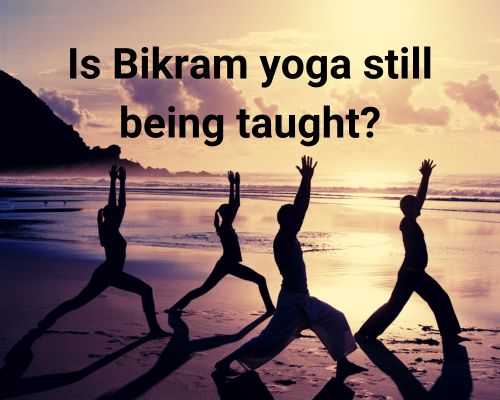
people doing hot yoga

The short answer is yes, Bikram yoga is still being taught. Despite the controversy surrounding its founder, the style of yoga he created continues to be popular around the world. Many studios still teach Bikram-style yoga, and there are even dedicated Bikram Yoga studios in some cities, see bikram Yoga near me.

While some people may choose to avoid Bikram yoga due to the controversy surrounding its founder, others continue to practice it and find it to be a beneficial form of exercise and stress relief.

Bikram Yoga Practice and Principles

Bikram Yoga is a form of Hatha yoga that involves a specific sequence of 26 postures and two breathing exercises. The practice is conducted in a heated room with a temperature of 105°F and 40% humidity. The core elements of Bikram Yoga are designed to promote balance, focus, and circulation. For a real experience, you can visit a studio. See bikram Yoga near me.

Core Elements of Bikram Yoga

The Bikram Yoga sequence is designed to systematically work the entire body. The 26 postures are designed to promote physical and mental well-being, with a focus on creating a balance between strength, flexibility, and endurance. The two breathing exercises, Savasana and Pranayama, are designed to help you relax and focus on your breath.

Health Benefits and Challenges

Bikram Yoga has been associated with several health benefits, including weight loss, improved metabolism, concentration, and flexibility. However, it is important to note that the practice can also be challenging, especially for beginners. The heated room, humidity, and intensity of the practice can cause fatigue, headaches, and other discomforts.

Bikram Yoga Postures Breakdown

The Bikram Yoga sequence consists of 26 postures that are designed to systematically work the entire body. Some of the postures include the Half Moon Pose, Awkward Pose, Eagle Pose, Balancing Stick Pose, Triangle Pose, Tree Pose, and Cobra Pose. Each posture is held for a specific amount of time, with a focus on proper alignment and breathing.

Attire and Accessories

When practicing Bikram Yoga, it is important to wear comfortable clothing that allows you to move freely. Many practitioners wear shorts and a tank top, and bring a towel to absorb sweat. The studio is typically carpeted, and there are mirrors on the walls to help you check your alignment.

Studio Environment and Ambiance

The studio environment for Bikram Yoga is typically a heated room with a temperature of 105°F and 40% humidity. The room is designed to promote relaxation and focus, with minimal distractions. The ambiance is typically calm and peaceful, with a focus on promoting physical and mental well-being.

Yoga as Exercise versus Tradition

Bikram Yoga is often viewed as a form of exercise, rather than a traditional spiritual practice. However, the practice is rooted in Hatha yoga, and includes elements of meditation and mindfulness. Many practitioners find that the physical and mental benefits of the practice go hand-in-hand.

Adapting to Modern Yoga Practices

As with any form of yoga, it is important to adapt the practice to your individual needs and abilities. Some practitioners may need to modify certain postures or take breaks during the practice. Additionally, there are many modern yoga practices, such as Evolation Yoga, that incorporate elements of Bikram Yoga while also incorporating additional postures and practices.

Controversies and Legal Issues

Bikram Choudhury’s Legal Battles

Bikram Choudhury, the founder of Bikram Yoga, has been involved in several legal battles over the years. In 2013, he was sued by former students for sexual assault and harassment. In 2016, he was ordered to pay $6.5 million in damages to his former legal advisor who alleged that Choudhury had sexually harassed her.
A yoga studio with mats arranged in a spacious, well-lit room. A sign on the wall reads "Bikram Yoga Class Schedule."

In 2017, a court in India issued an arrest warrant for Choudhury in connection with a sexual harassment case. Choudhury fled to the United States, where he currently resides.

Intellectual Property and Franchising

Bikram Yoga has also been the subject of legal disputes over intellectual property and franchising. Choudhury has trademarked the name “Bikram Yoga” and has attempted to prevent other studios from using the name. He has also franchised the Bikram Yoga brand, but many of his franchisees have since broken away and formed their own studios.

Cultural Impact and Celebrity Endorsements

Bikram Yoga gained popularity in the United States in the 1990s and early 2000s, thanks in part to celebrity endorsements from Shirley MacLaine and others. The practice has been criticized for its emphasis on physical appearance and for the behavior of its founder, Choudhury.

The Future of Bikram Yoga

In recent years, the popularity of Bikram Yoga has declined, due in part to the controversies surrounding Choudhury. However, some studios continue to offer the practice, and adaptations and evolutions of the practice have emerged, such as Evolation Yoga, which offers a similar sequence of postures but without the heat.

Adaptations and Evolutions of the Practice

Evolation Yoga was founded by Mark Drost and Zefea Samson. They are former Bikram Yoga teachers who broke away from the Bikram Yoga franchise. They offer a similar sequence of postures, but without the heat, and have certified teachers through their own teacher training program.

While Bikram Yoga has faced many controversies and legal battles, adaptations and evolutions of the practice have emerged. Some studios continue to offer the practice. However, it is important to be aware of the controversies surrounding the practice and to make an informed decision before participating.

Related Post

More Than Just Talk: The Silent Language That Binds UsMore Than Just Talk: The Silent Language That Binds Us

We all know the power of a good conversation, especially with the people we hold dear. Sharing our thoughts and feelings through words is a cornerstone of connection. But what if I told you that the majority of what we truly communicate goes far beyond the sentences we string together? Researchers at UCLA have made a fascinating discovery: a staggering 93% of our communication effectiveness hinges on nonverbal cues – the subtle dance of our body language, the fleeting expressions on our faces, and even the way we carry ourselves according to  https://zomgcandy.com/balancing-life-and-love-how-online-dating-fits-into-your-lifestyle/.

Think about those moments when you just knew something was off with a loved one, even when they insisted everything was fine. Or recall the instant comfort you felt in the presence of someone whose smile radiated genuine warmth. That’s the magic of nonverbal communication weaving its intricate spell. By becoming more attuned to the silent signals we ourselves are sending out, we can profoundly impact the flow of our conversations and the depth of our connections according to  https://eastendtastemagazine.com/discover-cultural-features-of-foreign-countries-traveling-and-dating/.

Consider something as simple as crossed arms. Without a single word, this posture can erect a subtle barrier, suggesting defensiveness or a closed-off demeanor. Conversely, an open stance, with your arms relaxed at your sides, often communicates a willingness to listen and engage – an unspoken invitation to connect.

Maria, a seasoned relationship coach, shared a compelling anecdote that beautifully illustrates this point. “I noticed a significant shift in my relationship when my partner started paying closer attention to my body language,” she recounted. “Our arguments decreased dramatically.” It’s remarkable how much tension can dissipate when we begin to acknowledge and understand these silent signals. When our spoken words align harmoniously with supportive nonverbal cues, it fosters a sense of coherence and trust, paving the way for more authentic and meaningful dialogue.

However, deciphering body language is only one piece of the puzzle. The emotional landscape we bring to our interactions also speaks volumes. Embracing vulnerability in our communication can be a transformative force in strengthening our bonds. When we express ourselves with openness and honesty, sharing our feelings and perhaps even our vulnerabilities, it often draws our partners closer. It’s a powerful message that says, “I trust you enough to show you the real me,” and this kind of openness often encourages reciprocal vulnerability.

To truly bridge the gaps and cultivate a sense of emotional safety, curiosity acts as a vital key. Engaging with each other by asking genuine questions about what the other person is feeling demonstrates that you care deeply and are truly invested in understanding their inner world. This creates an environment where both partners feel secure enough to be honest, allowing appreciation to flourish organically. When we feel seen and valued for who we are, the foundation of our partnership becomes significantly stronger and more resilient.

So, what does all of this mean for the fabric of our relationships? It means that by cultivating these essential skills – truly listening not only to the spoken words but also to the unspoken cues, becoming more conscious of our own nonverbal signals, and embracing vulnerability – our everyday conversations can evolve into something far more profound. They transform into meaningful connections that nurture greater trust, deeper intimacy, and a stronger, more loving bond with the people who enrich our lives the most. It’s about venturing beyond the surface of words and tuning into the rich and often unspoken language of the heart.

women-locking-their-knees-as-part-doing-of-hot-yoga

Why Locking Your Knees is Important in Bikram YogaWhy Locking Your Knees is Important in Bikram Yoga

When you attend a Bikram yoga class, you will often hear the instructor reminding you to “lock your knees”. This instruction may seem counterintuitive, but it is an essential aspect of the practice.

women locking their knees as part doing of hot yoga

Jane Benson of Bikram Yoga Mornington highlights that “Locking your knees is a technique that helps to stabilize your body and engage your muscles. This allows you to hold challenging postures for longer periods.”

When you lock your knees in Bikram yoga, you are essentially engaging the quadriceps muscles in the front of your leg, which helps to release the hamstrings. This contraction sends a message via the nervous system for the hamstring to stretch. This can feel uncomfortable or even painful at first.

However, with practice, you will find that locking your knees becomes easier and more natural. This will allow you to deepen your practice and hold postures with greater ease.

By locking your knees in Bikram yoga, you are also helping to build strength in your legs. This is essential for maintaining proper alignment and balance in the postures.

This technique helps to create a solid foundation for your practice. It allows you to move deeper into the postures and achieve greater flexibility over time.

Physiological Benefits of Knee Locking

When practicing Bikram yoga, locking your knees is an essential aspect of many poses. It may feel uncomfortable or even painful at first, but there are several physiological benefits to this technique. See Bikram Yoga Mornington.

Promoting Joint Stability

Locking your knees in Bikram yoga can help promote joint stability, particularly in the knee joint.

By engaging the quadriceps muscles in the front of your leg, you can provide additional support to the knee joint. This can help prevent injury and improve overall joint health.

Preventing Hyperextension

Hyperextension is a common problem in many yoga poses, particularly those that involve the knee joint. Locking your knees can help prevent hyperextension by creating tension in the quadriceps muscles.

This tension can help stabilize the knee joint and prevent it from bending too far backward.

Enhancing Muscle Engagement

Locking your knees in Bikram yoga can also enhance muscle engagement, particularly in the hamstrings.

By contracting the quadriceps muscles, you create tension in the hamstrings. This can help them stretch further and engage more fully. As a result, this can help improve flexibility and range of motion in the legs.

In addition to these benefits, locking your knees in Bikram yoga can also help increase pressure and tension in the connective tissue, ligaments, and cartilage around the knee joint. This can help improve overall joint health and reduce the risk of injury.

Potential Risks and How to Mitigate Them

Bikram yoga can be a challenging and rewarding practice, but it’s important to be aware of potential risks and how to mitigate them. Here are some key strategies to help you avoid injury and stay safe during your practice.

Avoiding Injury Through Proper Technique

One of the most important things you can do to avoid injury in Bikram yoga is to use proper technique.

This means paying close attention to alignment cues and making sure you’re using your muscles in the right way to support your joints and protect your body.

Some common sources of misalignment in Bikram yoga include locking your knees, over-stretching your hamstrings, and collapsing your core.

To avoid these issues, focus on engaging your core, lifting your kneecaps, and keeping a slight bend in your knees when necessary. You should also be mindful of your breath and avoid pushing yourself too hard too fast.

Understanding the Role of Alignment Cues

Alignment cues are an essential part of Bikram yoga, and they can help you stay safe and get the most out of your practice.

These cues may include instructions for proper alignment, modifications for different levels of flexibility, and reminders to engage specific muscle groups.

To get the most out of alignment cues, pay close attention to your body and be mindful of your movements. You should also be willing to ask questions and seek feedback from your instructor if you’re unsure about a particular cue or modification.

Balancing Effort and Awareness

Finally, it’s important to find a balance between effort and awareness in your Bikram yoga practice.

This means pushing yourself to your limits while also being mindful of your body and its limits.

To achieve this balance, focus on building strength and flexibility in your core, hips, ankles, heels, thighs, and other key areas.

You should also be mindful of the heat and its effects on your body. Take breaks as needed to avoid overexertion.

By following these strategies, you can stay safe and get the most out of your Bikram yoga practice.

Remember to listen to your body, use proper technique, and stay focused on your breath and alignment cues to avoid injury and achieve your goals.

Picture Perfect: Why Professional Photos Are Your Secret Weapon in London’s Dating ScenePicture Perfect: Why Professional Photos Are Your Secret Weapon in London’s Dating Scene

In the bustling, vibrant world of London’s dating scene, where competition can be as fierce as rush hour on the Tube, standing out is paramount. You’ve heard the old saying, “a picture is worth a thousand words,” right? Well, when it comes to online dating, those words can be the difference between a swipe left and a meaningful connection. This is precisely why investing in professional-quality photos can be your ultimate secret weapon in finding love in the capital according to  https://www.latestphonezone.com/.

Think about it: Londoners are busy. We’re constantly on the go, navigating careers, social lives, and the endless possibilities of a city that never sleeps. When someone is flicking through countless dating profiles, they’re making snap judgments. What’s the first thing that catches their eye? Your photos.

High-quality images aren’t just about looking conventionally attractive; they’re about showcasing the real you in the best possible light. They feature better lighting, thoughtful composition, and often a professional’s touch that allows your unique features and genuine expressions to shine through. Imagine a sun-drenched shot of you laughing in Hyde Park, or a candid snap of you enjoying a coffee in a charming Notting Hill cafe. These aren’t just pretty pictures; they’re visual invitations into your world according to  https://www.techwiki.in/.

The impact of professional photos extends beyond mere aesthetics. By enhancing the visual appeal of your dating profile, you significantly increase the likelihood that others will pause their endless scrolling and take a genuine interest in who you are. It demonstrates effort and care, two highly attractive attributes in any relationship. It subtly communicates that you’re serious about finding a connection and that you value presenting yourself authentically. In a city like London, where dating can sometimes feel overwhelming, showing this level of dedication can be incredibly refreshing.

Furthermore, professional photos often capture you in a variety of settings, perhaps highlighting your hobbies or your favourite spots in London. This provides immediate talking points for potential matches and can spark conversations that go beyond generic “hello” messages. Maybe you’re pictured at a gallery, at a local pub, or even enjoying a walk along the Thames – these visual cues offer glimpses into your lifestyle and personality, making it easier for someone to envision a connection with you.

Remember, every element of your online dating profile works in harmony. While captivating bios and engaging prompts are crucial for building an authentic connection, it’s your photos that often make that initial, indelible impression. They set the stage. By presenting yourself professionally with striking photos, you create a comprehensive profile that resonates with authenticity, charm, and a clear invitation for others to get to know the real you. It’s about more than just looking good; it’s about conveying confidence, approachability, and the genuine desire to form a meaningful relationship in this incredible city.